
Moving displays. Product demonstration stands.
We fabricate displays around a specific job: a rotating feature, a dimensional product story or a stand that presents a device for demonstration. The brief starts with the available space, product and intended interaction. We then review construction, fixings, power and access for upkeep.
Define what the display should do
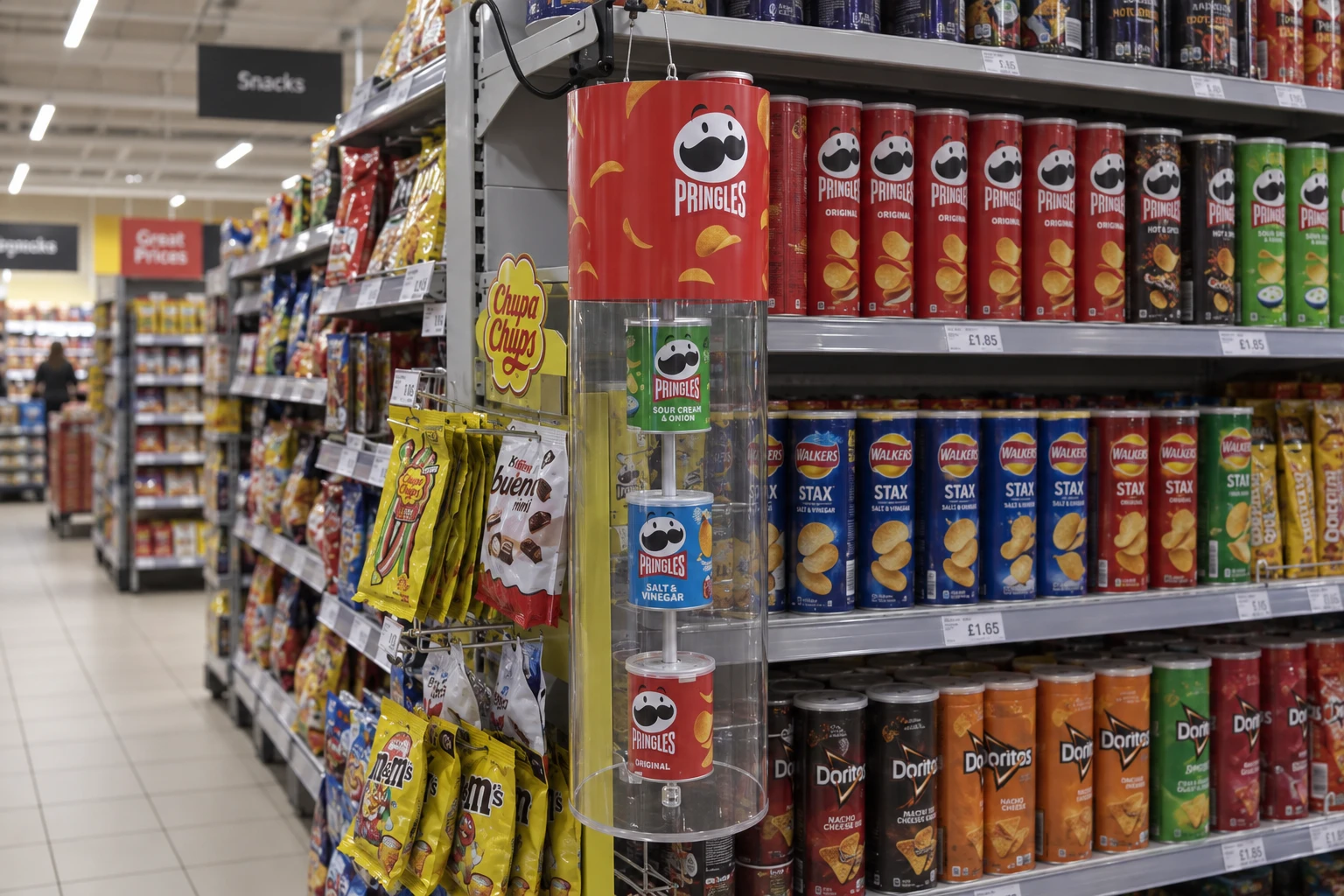
- Moving featuresA rotating element or agreed mechanism, designed around the shelf space and customer access.
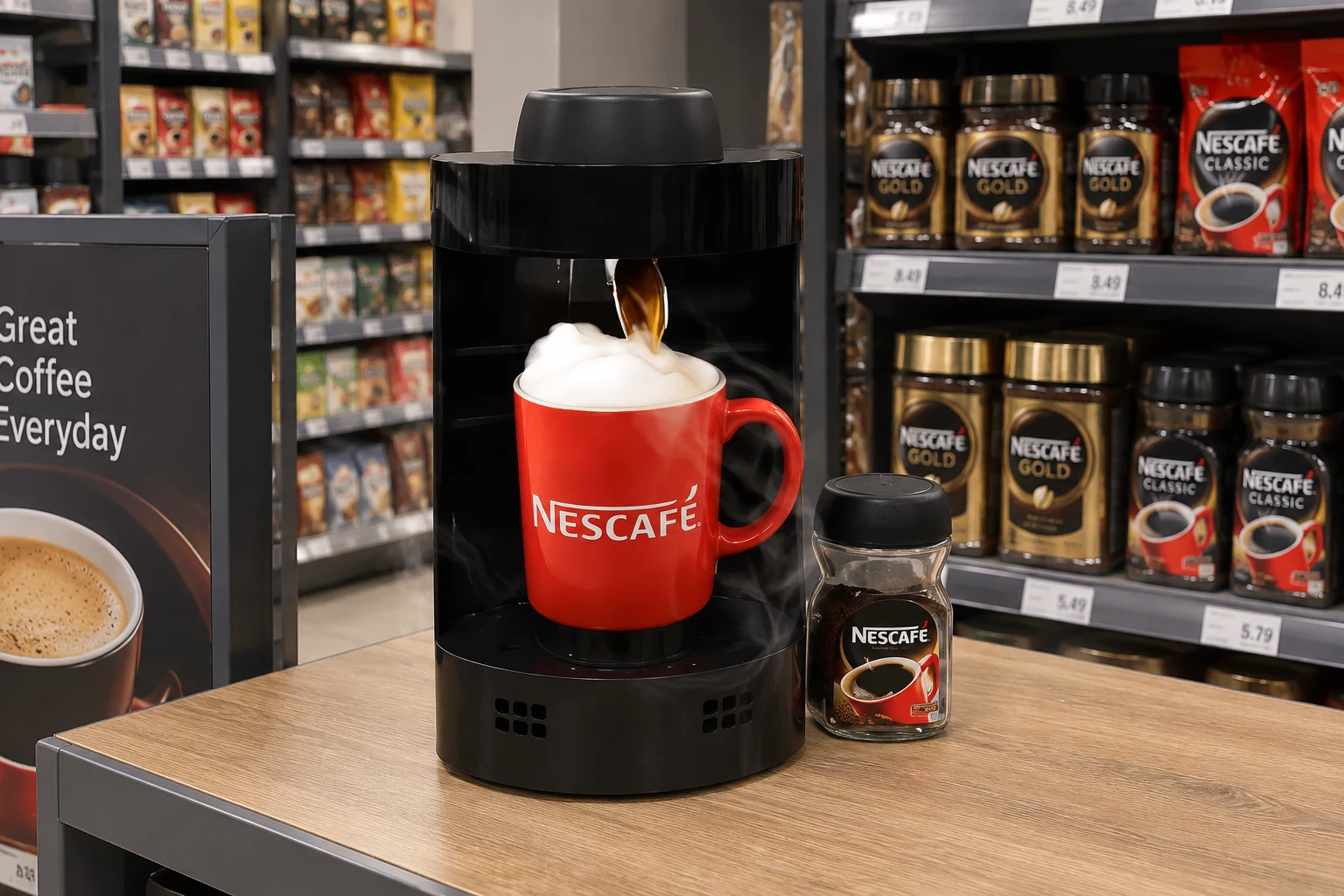
- Dimensional product storiesA physical detail that illustrates the product or its use, such as the sculpted coffee-pour feature in the portfolio.
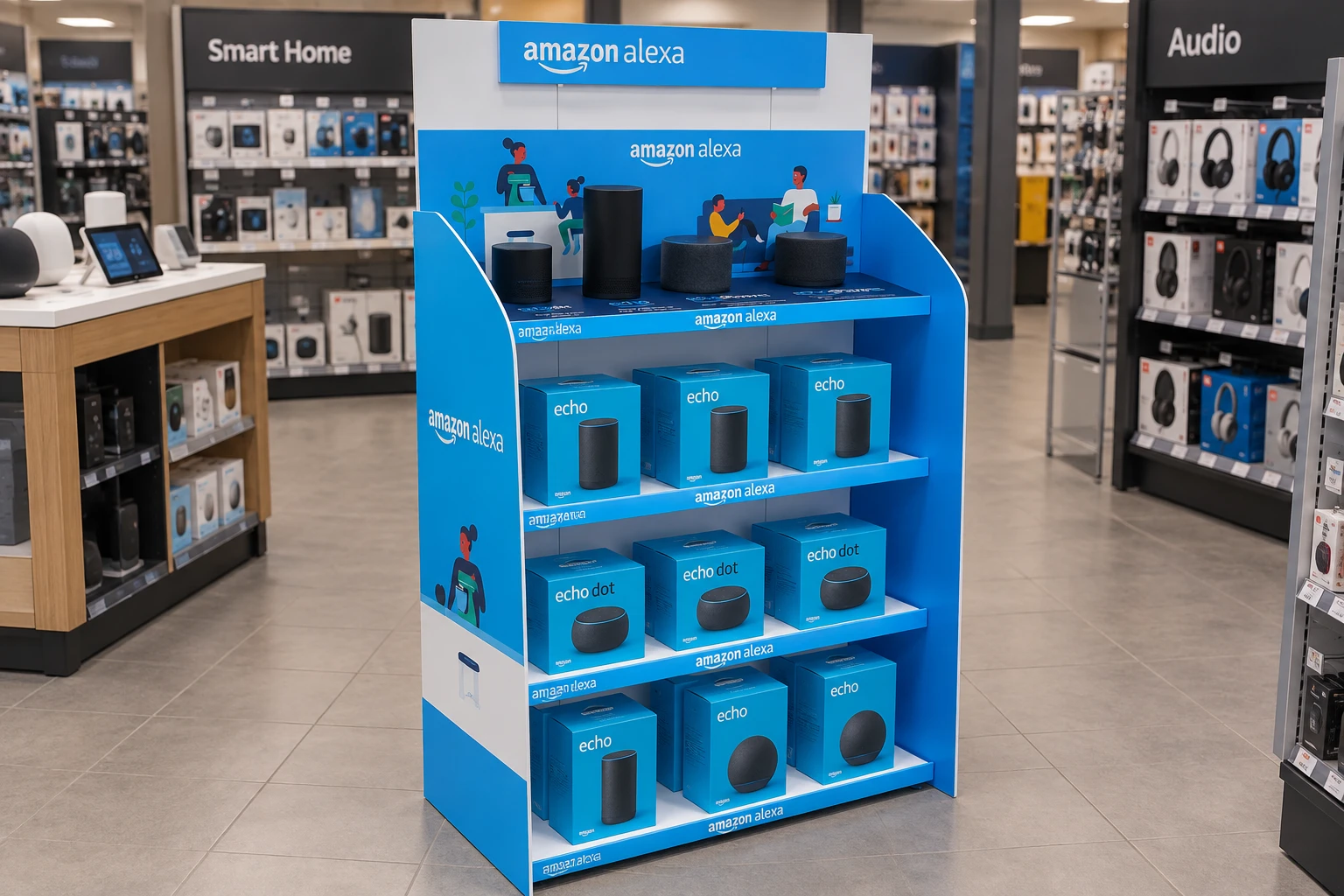
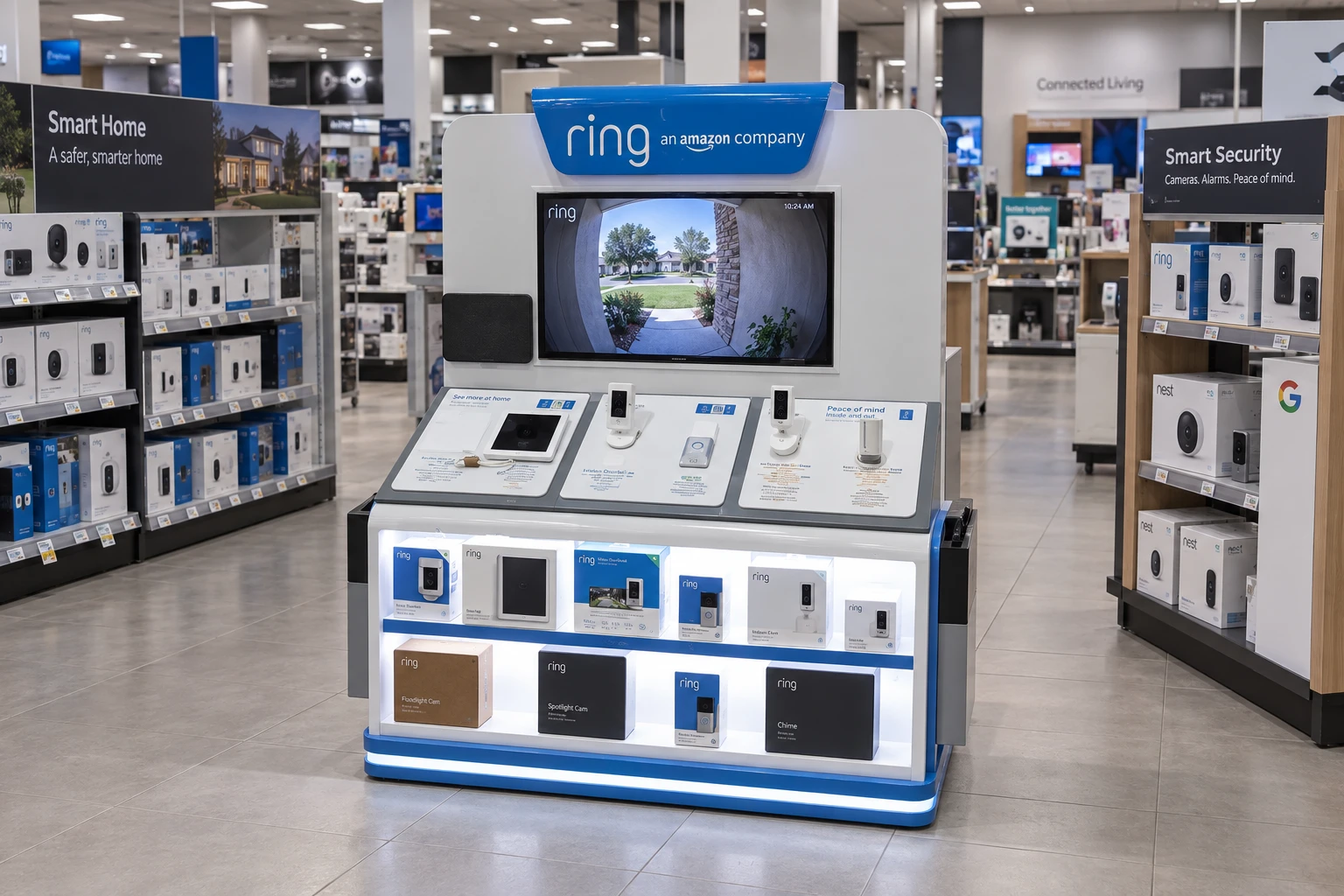
- Device demonstration standsFixtures that hold products, information and cabling. Device functionality and software are agreed with the relevant provider.
Start with the fixture and the operating conditions
Send a photograph of the intended position, its width, height and depth, and the product dimensions and weight. We need to understand operating hours, whether customers can touch the unit and where power is available. These details affect the mechanism, cable routing, fixings and access for cleaning or changing the product. If the campaign spans several stores, check differences between their fixtures before assuming one size will fit every location. Movement should serve a clear purpose and remain practical for the store team to operate.
From a display idea to a reviewable build
Define the action
Agree what moves, what stays fixed and what a visitor can touch or operate.
Review a prototype
Agree the prototype scope and review movement, stability and component access before approving repeat production.
Fabricate and assemble
Prepare the structure, graphics, lighting and agreed mechanism to the approved specification.
Install and hand over
Review fixings and power at the site, and define operating and care instructions within the project scope.
Separate fabrication from equipment and software
The proposal identifies the structure, materials, graphics, mechanical or electrical components, prototype work and installation included. Quantities, campaign duration, packing and transport affect the production approach. Screens, sensors, content or software require a separate scope review if the idea calls for them. We confirm the programme after reviewing the design, components and store requirements.
From our projects
Frequently asked
Can the unit fit an existing shelf?
We review fixture photographs, dimensions, permitted loading, fixings and power before deciding whether the display can attach to the shelf or needs an independent base.
Are devices, screens and software included?
The proposal states whether we supply the fixture alone or additional components. Devices, screens, content and software are not automatically included.
Can we start with one unit?
A single unit or review prototype can be scoped first. Materials, components and prototype costs are agreed before deciding on a production quantity.
Show us the product and the shelf
Include dimensions, quantities, the intended action and campaign date so we can define the build.